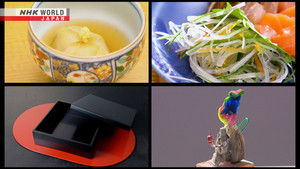
Core Kyoto
8.0·2013 - now·28m·14S·returning
The timeless heart of Japan's ancient capital. Against its rich backdrop of culture and tradition, today's Kyoto continues to innovate and inspire.
The timeless heart of Japan's ancient capital. Against its rich backdrop of culture and tradition, today's Kyoto continues to innovate and inspire.
No reviews yet
Sign in to write the first review
E1 · Kyo-machiya: Connecting People's Hearts
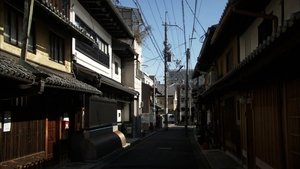
Kyotoites have lived in kyo-machiya townhouses for centuries. Each year, 1,000 are demolished, but Kyo-machiya Sakujigumi, a group of craftsmen skilled in machiya restoration, use natural materials an…
E2 · Kaiseki-ryori : The Ultimate in Culinary Hospitality
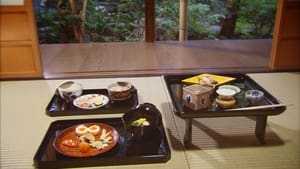
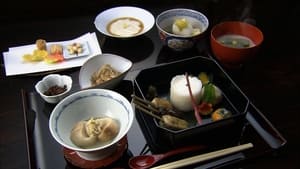
Stimulating all five senses, kaiseki-ryori is a Kyoto culinary work of art. Eiichi Takahashi, 14th generation owner of Hyotei, stresses kaiseki's roots in cha-kaiseki meals served at tea ceremonies. L…
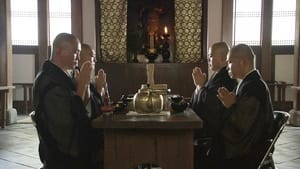
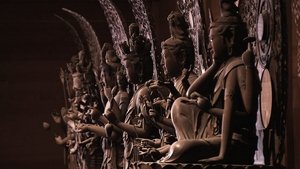
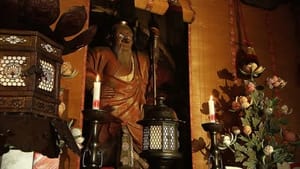
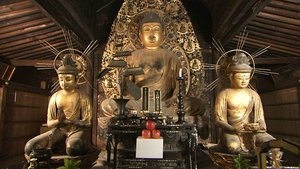
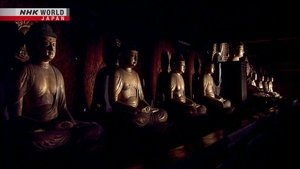
Kyoto has about 2,700 temples where an array of benevolent, meek, and ferocious Buddhist statues are worshipped. World Heritage temple Toji has a configuration of statues in an imposing, 3D mandala an…
E4 · Hanami: Kyoto's Cherry Viewing Festivities in the Spring
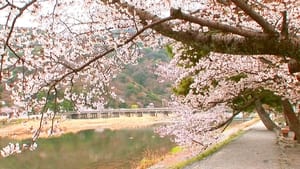
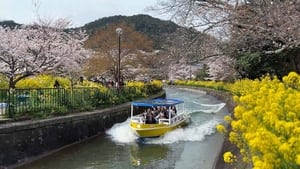
Various locations in Kyoto have been famous cherry-blossom-viewing spots for 1,200 years. As spring approaches, the locals' actions revolve around thoughts of hanami. The cherries keep family ties str…
E5 · Japanese-style Paintings: The Breathing World of Beauty
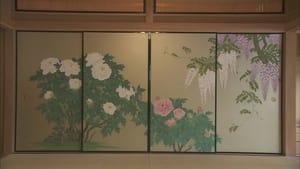
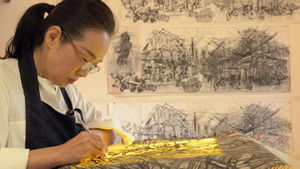
Japanese-style paintings are the embodiment of Kyoto aesthetics. Their delicate scenes are created using unique mineral pigments. Flower artist Rieko Morita emphasizes life in her work. She infuses it…
The quality of hospitality found at accommodations in Japan's old capital, Kyoto, is known worldwide. They exude a time-honored culture and uniqueness. The entrances are cleansed with sprinkled water …
E7 · Kagai: Kyoto's Flower District Where Elegant Dreams Bloom
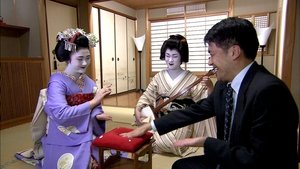
The main stage for hospitality in the glittering kagai entertainment district is the ozashiki function. Geiko and maiko refine their skills over years in dance and other performing arts to present at …
E8 · Aoi Matsuri: A Dynastic Festival in the Presence of the Deities
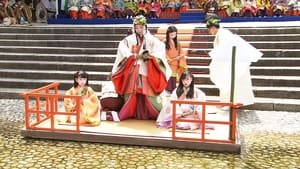
The origin of Aoi Matsuri, one of Kyoto's 3 great festivals, goes back more than 1,500 years. Diviners advised the people to ride horses in prayer for bumper crops and to appease the Kamo deities, who…
E9 · Chanoyu: A Bowl of Tea Draws Hearts Together
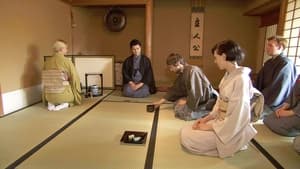
Sen-no-Rikyu (1522-1591) began the chanoyu, or tea ceremony, that is practiced today, 400 years ago. His simple, rustic wabi philosophy is still discernable in the designs, movements and mindset. In U…
E10 · Gion Matsuri: The Spirit of the Townspeople During Summer's Grand Festival
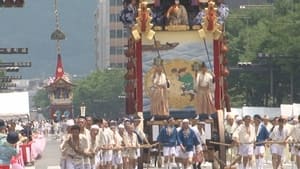
Gion Matsuri began as a prayer for the country's health when 66 halberds were erected and 3 mikoshi shrines were paraded through plague-ravaged Heian-kyo in 869. The 33 yamahoko floats in today's clim…
E11 · Shojin-ryori: Zen Cuisine as Training Within the Teachings
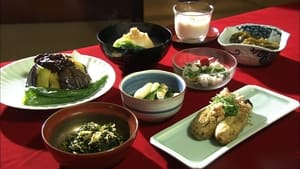
In the 1200's, the monk Dogen brought shojin-ryori, a vegetarian cuisine, from China along with Zen Buddhism, which forbids the killing of animals and the eating of meat. He once said, "Meals and thei…
Kyoto has many mountain springs, rivers and groundwater. The capital relocated here about 1,200 years ago for the water supply that enriched the citizens' lives and gave rise to Kyoto's culture. Farme…
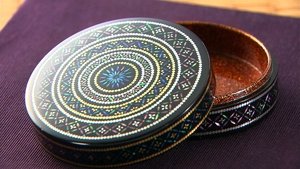
E13 · Kyo-shikki: The Jet-black, Golden Beauty of Kyoto Lacquerware
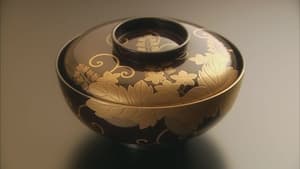
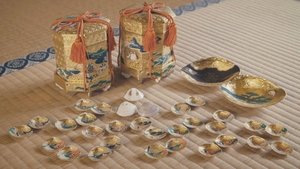
As demand for lacquerware grew in the political and cultural hub of Kyoto, artisans refined their designs and techniques with a distinctive approach to aesthetic beauty. This became kyo-shikki, or Kyo…
E14 · Karesansui: The Zen Cosmos in a Garden for Spiritual Training
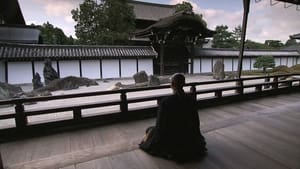
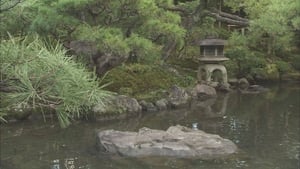
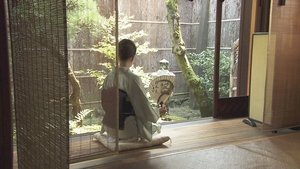
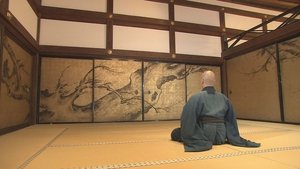
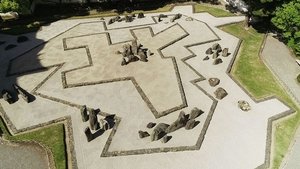
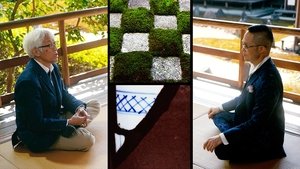
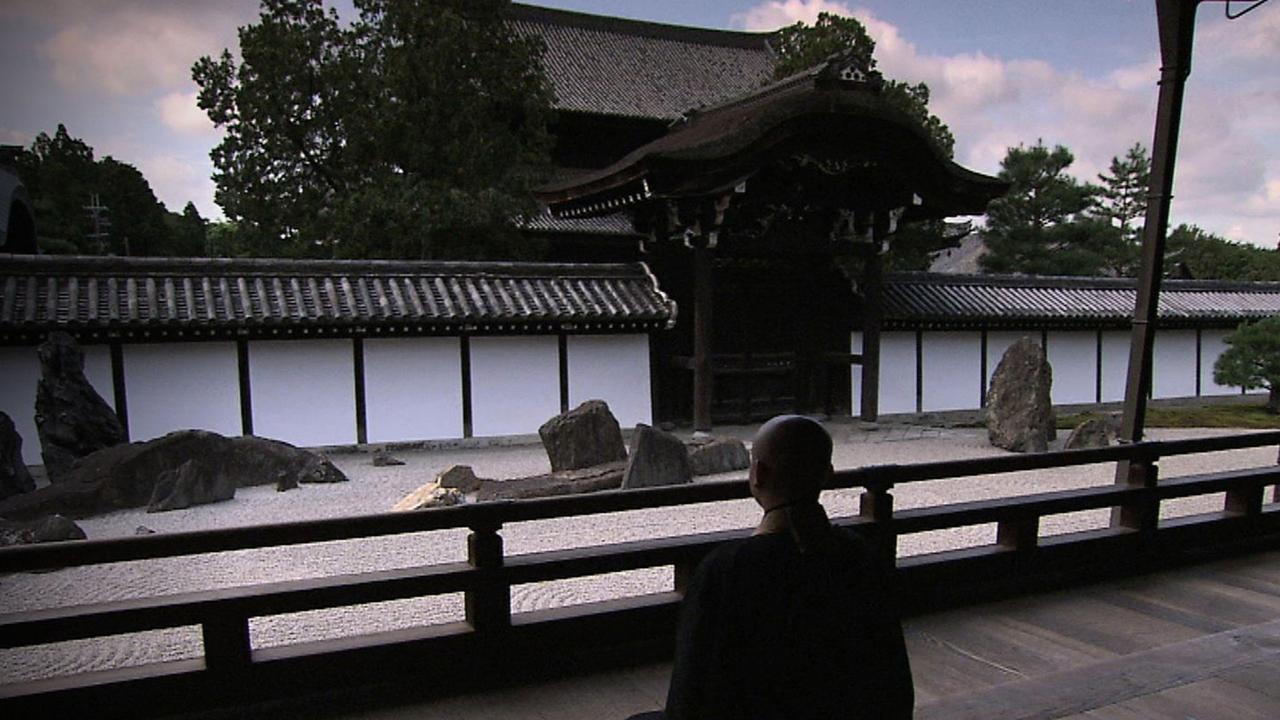
A pointed boulder with a large stone at its foot reaches for the heavens. The white gravel between them represents a swift flowing river, without the use of water. Karesansui is a unique dry-gardening…
E15 · Nishijin-ori: Beauty Crystallized in a Kyoto Brocade
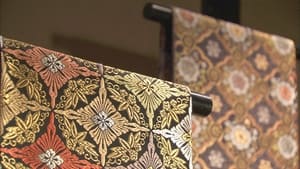
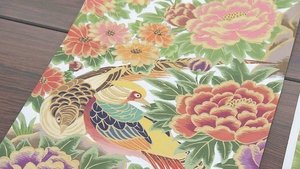
Nishijin-ori symbolizes the ancient capital's elegance and luxury. The obi-weaving process is divided into detailed tasks, such as mon-template design and yarn dying. Each artisan has a specialist rol…
E16 · Shinise: Established Businesses Survive the Centuries
The ancient capital has many shinise, or established businesses, with unbroken histories. Kyoto Prefecture classes a firm founded at least a century ago as shinise. Over generations, more than 1,100 K…
E17 · The Changing Leaves: The Transient Fall Beauty of the Ancient Capital
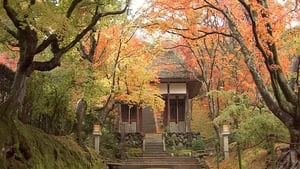
The changing leaves vividly color Kyoto, which lies in a basin and has marked temperature differences. For more than a millennium, people have delighted in their beauty and picnicked under the trees. …
E1 · Kyoto Confections: Experiencing Kyoto Culture Through the Five Senses
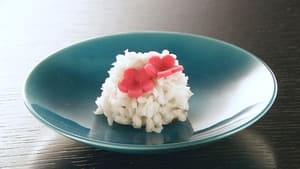
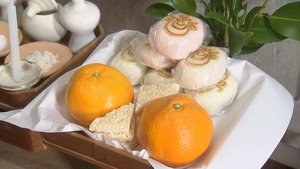
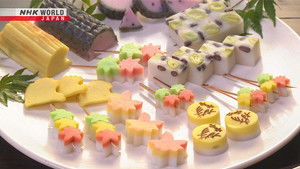
Kyoto confections are wagashi, or traditional confections, infused with Kyoto's charm and influenced by the tea ceremony. With beautiful designs and names that subtly reflect the seasons, tea confecti…
E2 · A Washi Capital: Paper of Diverse Beauty and Use for City Life
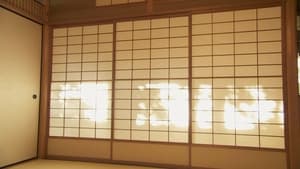
Traditional washi paper flourished in the temples, shrines and palaces of the ancient capital. Enduring today, this versatile paper is used to decorate interiors, such as sliding doors and hanging scr…
E3 · Obanzai: The Frugal Wisdom of Kyoto's Home Cooking
Obanzai are the frugal side dishes that grace dinner tables daily in Kyoto - the home of washoku, or Japanese cuisine. Cooked to make the staple dish of rice taste delicious, they use only simple ingr…
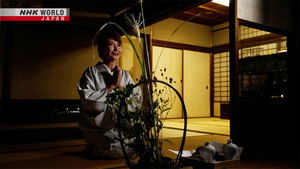
E4 · Ikebana: Revealing the Full Potential of Flowers
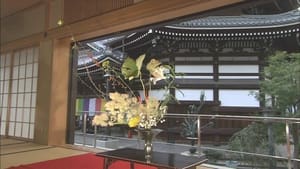
Ikebana is the traditional art of flower arranging. Developed in Kyoto it merges Asian naturalism with the floral offerings to Buddhist altars. The Ikenobo headmaster upholds the school's 550-year-old…
Calligraphy is the art of writing characters with a brush. The use of kanji characters, which entered from China, spread with the practice of copying sutras. In temples and shrines, the art projects t…
The butsudan Buddhist family altar was built as a miniature of the temple dais upon which the main image stands, so families could worship at home. Reflecting the Pure Land in this world, butsudan not…
E7 · Rimpa: An Artistic Style Transcending Time
Tawaraya Sotatsu, who emerged from Kyoto's merchant class, was one pioneer of the Rimpa School in the early Edo Period, and Ogata Korin consolidated it in the mid-Edo Period. The school is not heredit…
E8 · Bamboo Culture: New Life in Spring Enriches the Ancient Capital
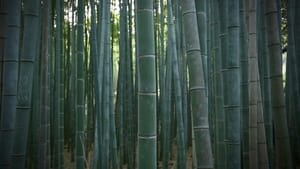
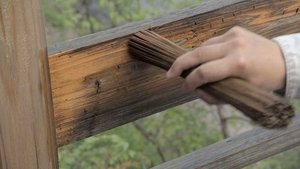
Kyoto has long-been a leading bamboo-growing region. Bamboo was considered holy in ancient times for its strong vitality. It is used at shrines and palaces as the barrier between the sacred and secula…
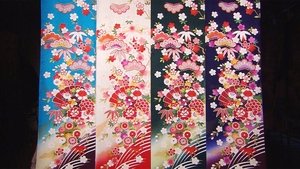
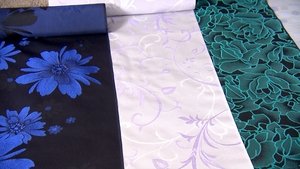
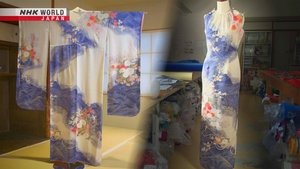
Kyo-yuzen fabric has distinct patterns and splendid, delicate colors. Kyo-yuzen dyed kimono brighten special occasions in Kyoto. A lady takes extra care of her grandmother's kimono that is filled with…
E10 · Kyoto Dolls: Adored by All, Their Grace Brings Peace
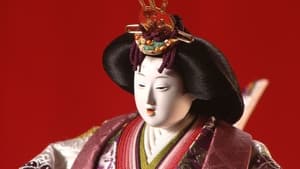
Filled with noble, graceful dignity, Kyoto dolls have long embodied people's prayers, relieved loneliness, and represented prayers for their children's growth. Connected to dynastic culture, these dol…
E11 · Buddhist Architecture: Craftsmanship Unites Places of Worship
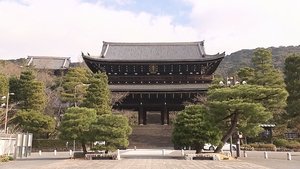
Kyoto is home to most Buddhist head temples, which shaped the ancient capital's historical landscape and fascinate visitors. Shichido-garan, the 7 most important buildings for Zen religious training, …
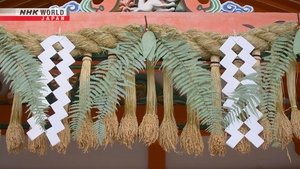
Shinto shrines have sacred shimenawa ropes, bells with cords attached, mirrors, various fittings, and ceremonial ornamentation that have adorned these places of worship since time immemorial. Made fro…
E13 · Kyoto Vegetables: Nature's Blessings Provide Fine Food for the Ancient Capital
The Kyoto basin is blessed with fertile soil and an abundant supply of good water. Kyoto winters are frigid; and summers, scorching. This environment yields eggplants, pumpkin, and other produce known…
E14 · Legends of the Spirit World: The Mysterious Inspires Awe in the Townsfolk
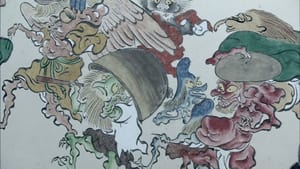
Ogres, specters, demons, ghosts and hell. The ancient capital's many myths of the spirit world seem fantastic today. Kyoto's citizens lived in fear and awe of the other world and appealed to the deiti…
The Japanese believe their ancestors' spirits return from the other world to visit during Obon in mid-August. The Gozan-no-okuribi ceremony to send them off is held in Kyoto at the end of Obon on Augu…
E16 · Fushimi Inari Taisha: A Manifestation of Prayers to the Deities on the Mountain
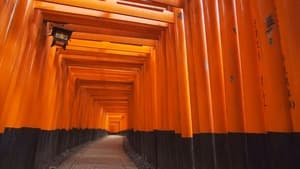
Fushimi Inari Taisha is famous worldwide for the vermillion shrine gates that line the paths in the mountain behind it, where its origins lie. Worshippers seeking happiness have visited this sacred gr…
E17 · Noh: A Spiritual Performing Art Bridging Fantasy and Reality
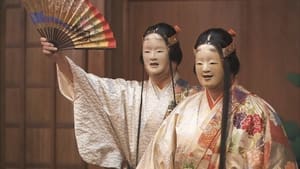
Noh is one of the oldest, extant performing arts and is a UNESCO Intangible Cultural Heritage of Humanity. It has been performed in Kyoto some 650 years, and its form remains largely unchanged. Throug…
E18 · Dynastic Culture: The Graceful Form of the Heian Aristocracy
Dynastic culture thrived some 1,200 years ago in Heian-kyo, heavily influenced by mainland Asian, especially Chinese, culture. Over time, it developed its own idiosyncrasies and permeated all aspects …
E19 · Kyoto Gardens: Aesthetic Spaces Mirror Nature
The ancient capital, Kyoto, continues to be innovative after 1,200 years. We dive deep into its core in this definitive program. Today: Kyoto Gardens as aesthetic spaces mirroring nature.
E20 · Shinise Food Culture: The Taste of Kyoto Links Past and Present
Kyoto boasts upwards of 1,000 shinise businesses, each more than 100 years old, many of which are in the food industry. Kyoto cuisine is the foundation of washoku Japanese cuisine, and these shinise a…
E1 · The 10 Artisans of Senke: Tea Utensils Heighten Rustic Simplicity
Around 400 years ago, Sen-no-rikyu pursued the art of heart-to-heart communication through a bowl of tea and advanced the wabi-cha style of tea ceremony, stressing the beauty within simplicity. The ut…
E2 · Kyoto Tsukemono: Pickles Enhance a Meal's Taste
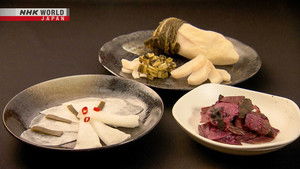
Kyoto tsukemono, or pickles, are made with various combinations of pickles and agents to preserve seasonal vegetables. Of these, three major varieties are still made using unique methods. Suguki turni…
E3 · Setsubun: Out with the Demons and in with Fortune in the Spring
February 3 is New Year's Eve by the old, lunar calendar and is the boundary between winter and spring. On this day, called Setsubun, households scatter soybeans for good fortune in the coming year, ex…
In the ancient capital, sake was for religious and imperial rites. Made exclusively at the imperial brewery, the process evolved under the influence of palace cuisine. Kyoto with its bountiful water s…
E5 · The World of Kimono: Kyoto's Timeless Sense of Beauty
Kyotoites have an affinity for the kimono that shares deep ties with traditional culture. A kimono researcher explains its aesthetics and the wisdom within this traditional clothing. The obi is an inf…
E6 · Kyoto's Cafe Culture: A Cup Full of Local Hospitality
After the first cafe opened in Kyoto in 1930, a coffee culture flourished as coffee salons enjoyed the patronage of local merchants, who prided themselves on staying abreast of the latest fashions. Ky…
E7 · Belief in Kannon: The God of Mercy Redeems All
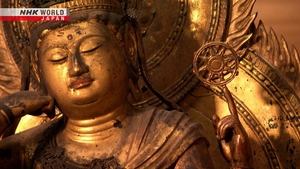
Kannon Bosatsu is warmly worshipped, a comfort for the heart. The subject of many paintings and statues, he saves people across Buddhist sects. The 11-faced Kannon faces each direction in search of pe…
E8 · Modern Architecture: Breathing Life into the Ancient Capital in a New Age
In the late 1800's Kyoto architects and builders were the first to embrace change as Japan modernized. They incorporated the unusual Western designs into their buildings, changing the cityscape with i…
E9 · Kyogen: Laughing at the Absurdities of Life
Kyogen is a traditional performing art, popular in Kyoto for more than 600 years. Noh evolved at around the same time and draws many of its tragic plots from historical events. But Kyogen is more acce…
E10 · Kyoto Decorative Arts: The Artisans' Unceasing Pursuit of Beauty
The decorative arts evolved throughout during the city's 1,200-year history and survive today. Kyoto's reputation commands the highest quality, and many works of stunning beauty emerged as artisans re…
E11 · Around the Temple and Shrine Gates: Activities Along the Approaches Connect People
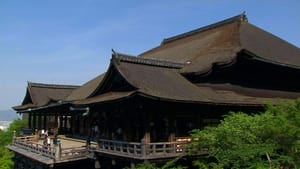
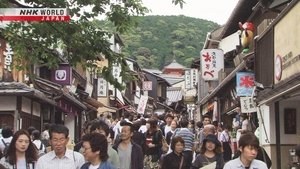
Kyoto is home to many Buddhist and Shinto head temples and shrines. The approaches to the gates have long attracted vendors plying local specialties to worshippers. Kiyomizudera Monzenkai was formed b…
Shidashi-ryori is Kyoto hospitality. Kyotoites do not serve visitors and honored guests homemade dishes on ceremonial occasions. The convention is to entrust the preparations to trusted caterers. The …
E13 · The Capital of Peace and Bliss: Kyoto Streets Still Bear Hideyoshi's Mark
The ancient capital was devastated during a period of intense war lasting 2 centuries until the late 16th century, when Toyotomi Hideyoshi assumed supreme power. He envisioned rebuilding a city that w…
For Heian aristocrats some 1,200 years ago, Kyoto life was the world of officialdom. Uji, located southeast of the capital, was the retreat where they let their bodies and minds run free. It represent…
E15 · The Essence Behind Kyo-ryori: The Chefs' Dedication in the Detail
Kyoto cuisine evolved in the old capital to please aristocratic eyes and palates. The local soft underground water inspired a cuisine that draws out flavors using dashi stock. Seafood was geographical…
E16 · Kyoto Woodcraft: Prominent Woodgrain and Refinement of Use
Over its 1,000 year history as capital, Kyoto attracted craftsmen with outstanding artistry from around Japan. They made quality implements and furnishings, and the craft developed a distinct Kyoto re…
E17 · Iwashimizu-sai: The Ritual in the Gloom in Respect for All Life
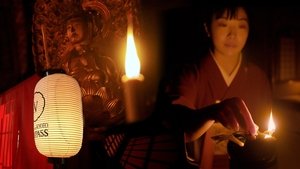
Iwashimizu Hachiman-gu lies in the southwest of Kyoto Prefecture. On September 15, this shrine holds the Iwashimizu-sai. This some 1,000-year-old festival is held in prayer for the peace of all living…
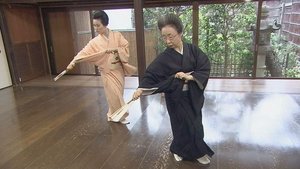
E18 · Traditional Kyoto Dance: Gion's Consummate Art Exalts Life
The Inoue School of Dance evolved as a distinct form of traditional Japanese dance in Kyoto. Danced to a shamisen and song backing, it developed exclusively for the geiko and maiko of Gion Kobu, Kyoto…
E19 · Kyoto's Rebirth: The Ancient Capital Prospers Anew
Kyoto today is a bustling tourist destination, but there was a time when it had lost its sparkle. The emperor moved to Tokyo 120 years ago to forge a modern state, and many followed, depleting the pop…
E20 · Folding Screens: Refined Furnishings Enhance Their Surroundings
Byobu, or folding screens, were introduced to Japan in the 7th century as room partitions and windbreaks. Their distinct form today was shaped by Heian lifestyles and sensibilities, and they were elev…
E1 · Kyo-yaki: Kyoto Ceramics Charm and Delight the Beholder
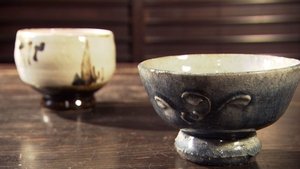
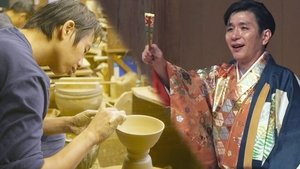
Kyo-yaki, or artistic ceramics fired in Kyoto, evolved within the rich culture of the ancient capital as crockery for the local cuisine and as utensils in tea ceremony. One potter, who devotes his lif…
E2 · Suiseki: A World of Understated Beauty Within Natural Stone
Suiseki is the appreciation of natural stone shapes using poetic imagination to visualize magnificent mountain, island, or waterfall landscapes. This pastime arrived from China in the late 1100's and …
E3 · Kyo-Kanoko Shibori: Untying the Beauty Bound Within
Kyo-kanoko shibori is the general term used for tie-dyed fabric made in Kyoto. The bumpy pattern on the fabric's surface is mesmerizing with its delicate shadows. Binding parts of the fabric to leave …
E4 · Small Restaurants: A Full, Rich Experience While Sipping Sake
The streets of Kyoto are dotted with many cozy-looking restaurants, which some may feel awkward about entering. Many of these small restaurants, referred to as koryoriya, specialize in Japanese cuisin…
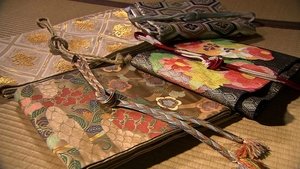
E5 · Obi: Unbridled Beauty in a Knot
The obi sash is an integral accessory for the kimono. One company has produced opulent Nishijin-ori obi for more than 120 years. A lady conveys the obi's allure through fitting classes. A dresser deft…
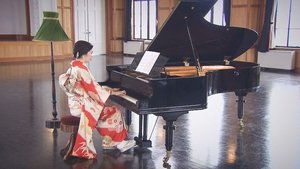
E6 · Traditional Musical Instruments: Eternal Tones Waft Through the Ancient Capital
The world's oldest orchestral music, gagaku was imported from mainland China in ancient times. The melody is not based on a scale, yet the tunes are gentle, unmetered tones of continuous notes. The sh…
E7 · Woodblock Prints: Beauty in the Hands of a Trinity of Artists
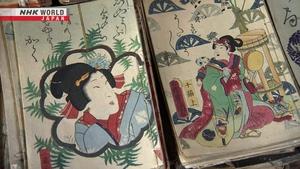
Traditional woodblock prints in the ancient capital have a strong, distinct history. Their origins lie in the woodblock printing of Buddhist scriptures. Compared to the mass production of ukiyo-e prin…
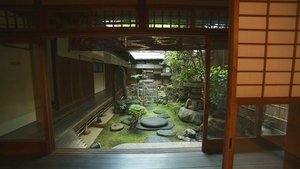
E8 · Tsubo-niwa: Life Enhanced by Quintessential Spaces
Traditional Kyoto Machiya townhouses have narrow entrances, and are long and deep. At the back lie small Tsubo-niwa gardens, enclosed on all sides. Originally serving to light and ventilate the house,…
E9 · Insho Domoto: The Pulsing Heart of Artistic Innovation
Kyoto artist Insho Domoto was prolific in the mid-20th century. He painted more than 600 dynamic sliding door paintings for Tofuku-ji, Chishaku-in and other major Buddhist temples in styles ranging fr…
During the spring and fall tourist seasons Kyoto's shrines and temples open their usually hidden treasures to the public. The Buddhist statues and paintings, and other precious cultural assets that ha…
E11 · Kyoto Walls: Elegance Molded from Earth
The ancient capital's dignified air of yesteryear is in part generated by earthen walls: the walls of the imperial palace, shrines, temples and even private properties. Earthen walls imbue tea houses …
E12 · Kata-yuzen: The Stenciled Beauty of Dyeing
Kata-yuzen is a Kyoto yuzen dyeing method that sometimes requires as many as 100 stencils to complete a bolt of kimono fabric. The development of this method saved dyers much time and enabled mass pro…
E13 · Cool Customs: Beating the Summer Heat
Kyoto is surrounded by mountains on 3 sides, so the city is concentrated in the basin where summers are sultry. Over the centuries, Kyotoites contrived ways to stay cool. They dread the heat but revel…
Paper talismans protecting against fire are common sights in Kyoto homes. People receive them at Atago Jinja, situated on top of a rugged mountain. The shrine holds Sennichi-mairi, or the 1,000-day pi…
E15 · Kiyomizu Rokubey: Tradition and Vision in Ceramics
The Kiyomizu Rokubey studio, one of Kyoto's leading potteries, was established 245 years ago. Led by the current Rokubey, the 8th generation to take the name, it continues to produce elegant yet pract…
E16 · Stone Jizo: Neighborhood Guardians Watch Over Children
Some 10,000 stone Jizo Buddhist statues dot the streets of Kyoto. At the end of summer, children gather at the street corners where the statues stand for lively Jizo Bon festivities. This annual event…
E17 · The Cinema Capital: The Professionals Behind the Samurai Filming Industry
Camera crews are common sights in Kyoto's historic streets and peaceful rural areas. The first film screening in Japan was held here in 1897, and Kyoto became the cradle of the Japanese movie industry…
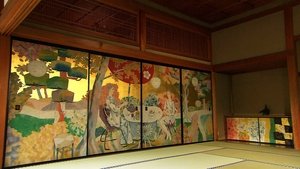
E18 · Fusuma Paintings: Artful Partitions Transform Space
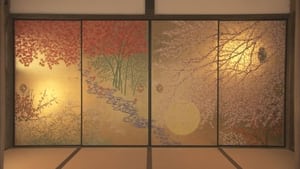
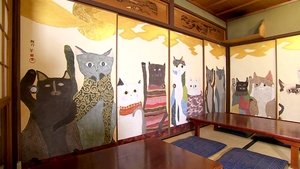
Fusuma are uniquely Japanese fittings, dating back a millennium, that act as partitions, sliding doors and walls. Painting them can transform a room's ambience. Fusuma paintings have evolved in keepin…
E19 · Yase Shamenchi Odori: A Dance of Gratitude
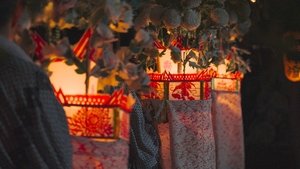
Boys dressed as maidens walk the streets at night wearing lanterns adorned with intricate, cut-paper designs on their heads. Girls perform a votive dance. This intriguing festival held in Yase, locate…
E20 · Iwakura Fire Festival: The Divine Spirit Returns
At 3 a.m. on October 22, two large pine torches over 10m long are lit to signal the start of the fire festival at Iwakura Jinja. Long ago, it was believed that demons were contained by a huge boulder …
E1 · Ohara: A Mountain Village Echoing with Buddhist Chants
Some 1,000 years ago, monks from warring Mt. Hiei and nobles from the capital retreated from the world in rustic Ohara, northeast of Kyoto. The monks perfected the practice of shomyo, a melodic singin…
E2 · Kyoto State Guest House: Hospitality Imbued with Beauty and Craftsmanship
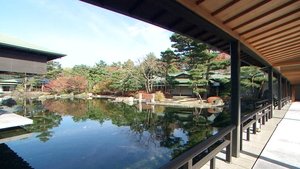
The Kyoto State Guest House was built as a Japanese-style reception facility within the Kyoto Imperial Palace Park in 2005. This serene, elegant single-story facility hosts dignitaries from around the…
E3 · Public Baths: People Gather to Wash Their Troubles Away
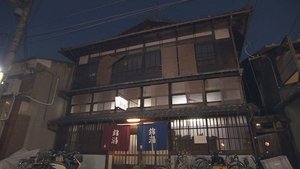
Sento, or bathhouses, were built in Kyoto to cater to the large student and artisan population who lived in lodgings without baths. Many are worthy of historic note. One has been operating for 1,300 y…
E4 · Kitayama Cedar: Lending a Quality of Polished Dignity and Beauty
The soaring forest of tall, straight cedars in Kitayama, in Kyoto's northwest, is a glorious sight. Kitayama cedar -- known for its light color, uniform thickness, and smooth, knotless trunk -- is tre…
E5 · The Culture of Incense: The Wafting Scents of an Ageless Pleasure
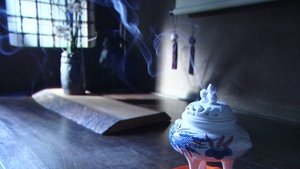
Incense is primarily made by mixing natural plant-derived scents. It lends rooms ambience to welcome guests and is used in grooming. Originally burned in prayer, it now enrichens everyday life in Kyot…
E6 · Kyoto Tofu: Subtle Taste Nourished by Skill and Pride
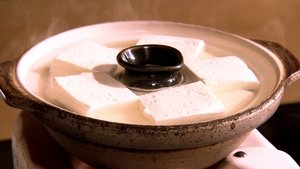
Tofu arrived from China along with Buddhism over a millennium ago. It further evolved in Japan as an ingredient in Shojin-ryori vegetarian Zen cuisine and in time appeared on the tables of the common …
E7 · Modern Kyoto: The Ancient Capital's Aesthetics Shape the Future
Kyoto's revitalization at the dawn of modernization in the 1860's was spurred by its 1,000-year history of tradition and innovation. The source of this vitality is the "generous and adaptable spirit" …
E8 · Potter Kanjiro Kawai: Freely Creating a Homely Warmth
Kanjiro Kawai was prolific in Kyoto in the mid-1900's. Originally from Shimane Prefecture, he devoted himself to pottery at Gojozaka, the hub for graceful Kiyomizu ceramics, for 46 years. He is regard…
E9 · The Art of Cleaning: Maintaining the Ancient Capital's Beauty
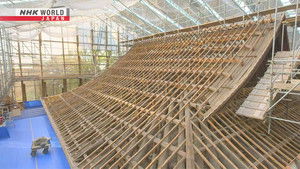
The business of Araiya in Kyoto involves cleaning and restoring old temples, shrines, Machiya-style townhouses, and other wooden structures to their former glory. The industry is sustained by many Kyo…
E10 · Nenbutsu Kyogen: Buddhist Teachings Behind Masked Theater
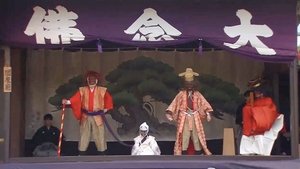
Nenbutsu Kyogen is held at Kyoto temples in spring. This masked theater began here 1,000 years ago as group recitations of Buddhist teachings to receive greater blessings. In time this evolved into a …
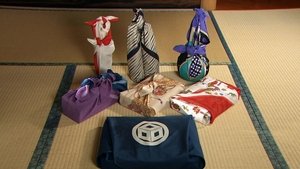
E11 · The Custom of Wrapping: Conveying Hidden Sentiments
Kyotoites have for centuries refrained from directly conveying their true sentiments. Instead, they have refined the art of gift wrapping as a means of subtle communication. As senders honed their ski…
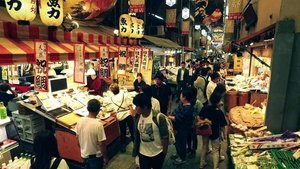
E12 · Nishiki Market: Kyoto's Thriving Kitchen
Nishiki Market, referred to as "Kyoto's kitchen", supplies local households and businesses with choice local cooking ingredients, including Kyoto vegetables and seafood. It began 1,000 years ago with …
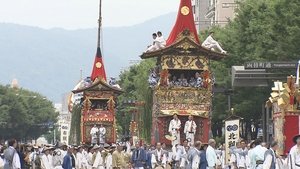
E13 · Gion Matsuri Floats: The Pride of Generations Revived
Gion Matsuri was restored to its former glory in 2014, almost 50 years after its two processions were merged into one. Again one parade precedes the deities' journey from the shrine to their temporary…
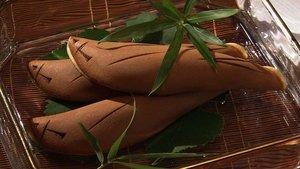
E14 · Ayu Sweetfish: A Summer Delicacy with Culture
In early summer, confectioners display traditional sweets shaped like ayu, or sweetfish. For Kyotoites, ayu is as important a summer fish as conger pike. For centuries, fresh seafood was limited in la…
E15 · Hidari-daimonji: Flames of Prayer to the Other Side
Japanese believe their ancestors' spirits visit in mid-August. To safely guide the spirits back to the other world, they light bonfires on 5 mountains in the Gozan-no-okuribi ceremony. The residents c…
E16 · Kyoto Braided Cords: Bit Players That Shine
Kyoto's braided cords came into their own as fashion accessories for the nobility, 1,000 years ago. Elegant and practical, they were highly prized, and used in religious and formal settings. They came…
E17 · Footwear Culture: Dressing the Feet for Form and Function
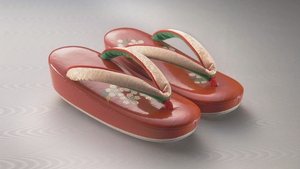
Geta and zori set off the kimono ensemble. People from all walks of life covet Kyoto footwear that evolved with the kimono. Artisans pursue beauty and functionality in the simple construction of a V-s…
E18 · Zuiki Matsuri: A Celebration of the Local Harvests
In early October, Kitano Tenmangu shrine holds the Zuiki Matsuri festival. Sacred palanquins carry the spirit of the shrine's deity through the parish to its temporary abode. Enshrined there is a port…
E19 · Ink Paintings: Insights into the Heart of Zen
Dramatic blacks and pearly grays evoke profound scenes. Originating in China, ink painting was once part of Zen monks' ascetic training. It reveals the beauty of space in a simple, refined state and c…
E20 · Kyoto Snacks: Sweets and Treats for Everyday People
In Kyoto, people regularly buy sweet treats at stores, which specialize in seasonal sweets that are also used in festivals. Some purveyors continue to use age-old ingredients and methods, and the line…
E1 · Kurama: Mystical Land of Legends
Mount Kurama, located north of urban Kyoto, is steeped in legend. Goblin-like creatures called Tengu are believed to live deep in the forest, where one allegedly taught swordsmanship to a 12th-century…
E2 · Fabric Pieces: Honoring the Past
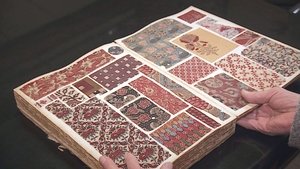
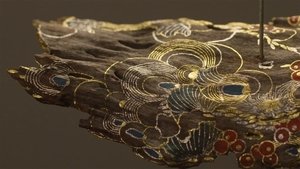
Kyotoites in days of old valued high quality fabric and woven textiles from abroad like gold. Pieces of these fabrics have been handed down and continue to fascinate people today. Their eternal beauty…
E3 · Celebrating the New Year: With Reverence and Gratitude
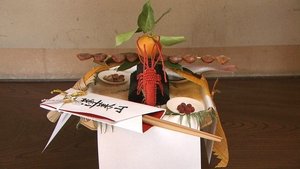
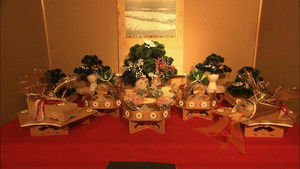
The year end begins in mid-December. Maiko and geiko pay their respects to teachers. Decorations and other seasonal goods enjoy brisk sales at markets, homes are decorated and osechi cuisine is prepar…
E4 · An Artistic Lineage: Nurturing a Painting Tradition
Kyoto City University of Arts was founded in 1880. Its educational policy emphasizes shasei – painting from life through intensive observation to glean a subject's true essence. It continues a practic…
E5 · Bubuzuke: A Dish Inspired by Frugality
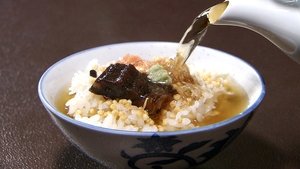
Hot green tea poured over steamed rice topped with salted kombu kelp and other flavorings is commonly known as ochazuke, but called bubuzuke in Kyoto. Records from the 1800's show that common folk coo…
E6 · Maiko Hair Ornaments: A Classical Culture of Kawaii
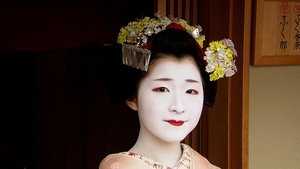
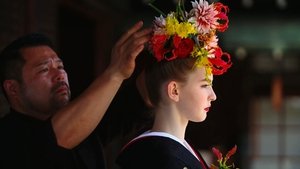
Maiko are the charming symbol of Kyoto's kagai entertainment districts. Their hairstyle and hair ornaments are key elements of their kawaii appeal. The ornaments are changed every month to reflect the…
E7 · Yasurai Matsuri: Town Elders' Prayers Embodied in Flowers and Dance
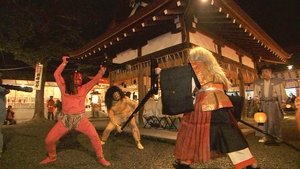
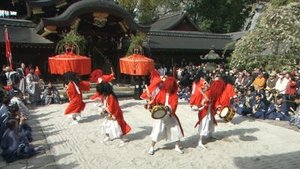
Red and black demons beating drums and gongs dance through the streets of Kyoto's north in the Yasurai Matsuri, one of the city's three most curious festivals. In days of old, pestilence ran rampant e…
E8 · Dynastic Arts & Crafts: The Pursuit of Heian Peace and Beauty
Vividly painted clamshells and a pristine cypress helmet -- these and other works bear a legacy of beauty and formality dating back over 1,200 years to the Heian dynasty. Behind them lies a code of pr…
E9 · Mirei Shigemori: The Ageless Modernity of the Rock Garden
Mirei Shigemori, a prolific landscape artist based in Kyoto from the late 1920's, is famous for the striking and abundant creativity of his gardens. He made a powerful impact on garden design in Kyoto…
E10 · Kyokusui-no-Utage: Poetry with Classic Heian Elegance
1,000 years ago, aristocrats would compose short waka poems seated by a babbling brook at the imperial palace, sipping sake and admiring the changes in the seasons. This outdoor party was revived at J…
E11 · Satoyama Living: Country Customs Sustaining the Ancient Capital
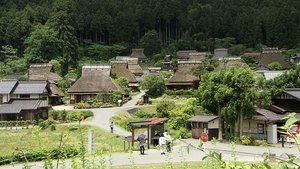
The satoyama style of living in harmony with nature, and the customs that influenced life in the ancient capital, survive in the mountains north of central Kyoto. An old inn in the town of Hanase cont…
E12 · Japanese Pepper: The Zesty Spice of Kyoto Cuisine
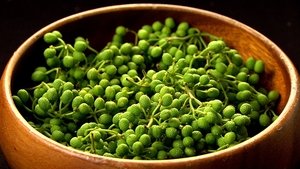
Japanese pepper, or sansho, is characterized by a fresh aroma and a tongue-numbing tingle. A sprinkle of it can dramatically perk up the flavor of food. Used in Japanese cooking for over 1,000 years, …
E13 · Tatami: The Flooring Underlying Japanese Culture
Tatami's history stretches back 800 years to the imperial court. Later it evolved with the tea ceremony and with the lifestyles of ordinary people. Tatami has influenced comportment, and even determin…
E14 · Folding Fans: Cooling Accessories Encapsulate Elegance
In Japan's humid summers, people cool themselves with fans that can be conveniently folded away. Large folding fans, or ogi, were first used as symbols of nobility in Heian court rituals over 1,000 ye…
E15 · The Matsuage Festival: Keeping the Fire Tradition Alive
The biggest event in the mountain village of Hirogawara in northern Kyoto is held in late August. Men hurl flaming bundles into the air to light a torch towering 20m high in prayer for good health and…
E16 · The Artisans for the Deities: Enduring Skills and Devotion
Kyoto has a particular profusion of Shinto shrines and festivals. The sacred and ritual objects, and priestly vestments used in Shinto are made in accordance with a 1,000-year-old system of convention…
E17 · Kyoto Cosmetics: Secrets for Drawing Out Inner Beauty
Local-brand cosmetics are must-have souvenirs for women visiting Kyoto. New products in pretty Japanese-style packaging are constantly being released, made with gentle natural ingredients and methods …
E18 · The Culture of Gold Leaf: Gossamer Layers Beget Profound Beauty
Gold leaf is just 0.1 micron thick, and almost translucent, but it has a lasting luster. Gilt craftsmen utilize its qualities to accent brocade, lacquerware, and Buddhist structures and statues. In th…
E19 · Kyoto Swords: Splendor That Dispels Evil Spirits
Swordsmiths have forged swords in Kyoto for over a millennium. More than mere blades, these swords were also symbols of a spiritual culture. As they gained prestige, they became much sought-after gift…
E20 · End of the Samurai Era: The Capital Survives Turbulent Times
The events of the mid-1800's that led to the dawn of the modern era in 1868 shook Kyoto. The Tokugawa Shogunate collapsed, ending 700 years of samurai control. Youths battled for their conflicting ide…
Arashiyama -- one of Japan's most scenic spots -- and famous temples are located in Sagano. Its lush nature and seasonal beauty enchanted the court nobility who made it their retreat a millennium ago,…
E2 · Modern Civil Architecture: A Strikingly Eclectic Heritage
Many modern buildings for use by ordinary citizens, such as homes, schools, and restaurants, sprang up around Kyoto in the early 1900's. Kyotoites desired buildings that blended in with the natural en…
E3 · Kyoto's Bakery Culture: Testament to the Ancient Capital's Modernity
It may come as a surprise that Kyoto -- the capital of Japanese cuisine -- leads the country in the consumption of Western culture's staple food. Bread entered through Yokohama and Kobe during moderni…
Kabuki evolved from the unorthodox dances of a female performer in Kyoto in the early 1600's. The Minamiza is the only remaining theatre of the many that operated in its time. The name Kabuki derives …
E5 · Kyoto Storefronts: Enticements to Enter Within
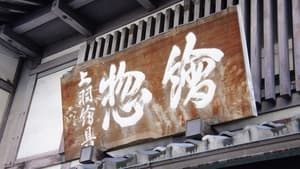
Traditional Kyoto store frontages feature latticework, a "noren" entrance curtain and perhaps a signboard. Confectioner, retailer or restaurant - most trades developed their own distinct style. These …
E6 · Amida Buddha: Prayers for Guidance to the Pure Land
Buddhists faithful intone "Namu Amida Butsu" in ardent prayer to Amida Buddha for the release from suffering and death in this world into the Pure Land of Ultimate Bliss. "Namu" means to embrace or ta…
E7 · Kyoto-style Sushi: Artful, Beautiful and Delicious
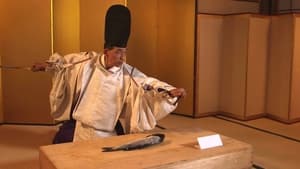
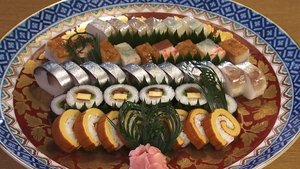
The origins of the local sushi, which does not use raw fish and places importance on the rice, lie in mackerel sushi. The fish needed to be salted to prevent spoilage on its journey to landlocked Kyot…
E8 · Kyoto Toys: Elegant Amusements That Inspire Delight
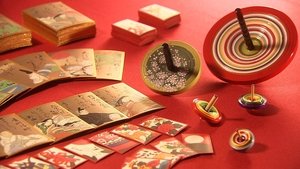
Many of Japan's traditional toys and playthings originate in the culture of the imperial court 1,000 years ago: a lavish shell game, Fushimi figurines that are thought to have inspired clay figures no…
E9 · Family Crests: Pedigree in the Ancient Capital
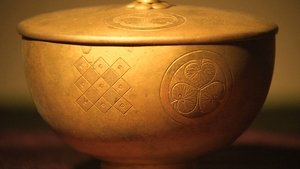
The dignified crests adorning various items from Noren curtains to temple roofs are a common sight in Kyoto. These symbols of families and organizations originated over 1,000 years ago. Once the privi…
E10 · The Modern Flower: Old Meets New in Arrangement
All manner of floral encounters await people around Kyoto. Florists do not just sell flowers but also arrange them on site with designer flair. Ikebana schools collaborate to revive the secret art of …
E11 · Randen: The Streetcar Close to Residents' Hearts
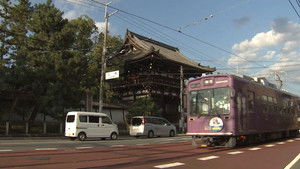
Randen weaves its way to popular tourist destinations Arashiyama and Kitano, with Ryoan-ji and other UNESCO World Heritage Sites scattered along the tramlines. Founded in 1912, the streetcar remains a…
E12 · Kyoto Markets: Places of Worship Bring People Together
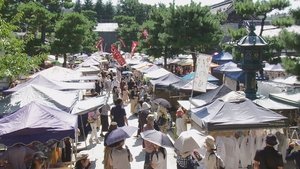
Kyoto's famous Buddhist temples and Shinto shrines hold markets on their fete days. Toji's bazaar attracts up to 200,000 visitors. Kitano Tenmangu shrine's antiques market features sacred dance and dr…
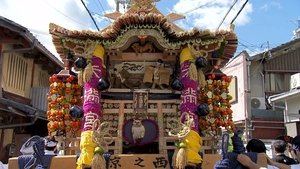
E13 · Awata Matsuri: An Ancient Festival Revived
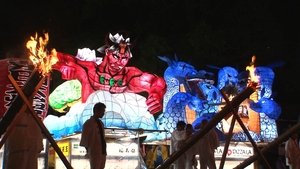
Giant lantern floats light up the night, and the next day a 1.2-ton portable shrine is carried through the streets by a total of 250 people, preceded by long poles rising into the sky, balanced by peo…
E1 · New Wave Dyeing: The Challenge for Innovation Within Tradition
With kimono no longer everyday attire, Kyoto's dyeing industry faces decline. But people are taking on the challenge of ensuring the traditional techniques will survive. An artist specializing in Kata…
E2 · Popular Noh: A Spiritual Art Fosters Connections
The performing art of Noh has a history stretching back more than 600 years and is registered on UNESCO's list of the Intangible Cultural Heritage of Humanity. Masked actors in sumptuous costumes use …
E3 · The Culture of Gift Giving: Beautiful Etiquette Strengthens Relationships
A girl in her first year receives dolls representing an emperor and empress. People give each other Senmaizuke turnip pickles at year's end. In December, maiko present their dance teachers with mochi …
E4 · Bamboo Innovation: Creative, Pliable and Sustainable
Bamboo has long been used in architecture and everyday tools. Today the Kyoto bamboo industry is in decline due to lifestyle changes and the lack of bamboo craftsmen. One artisan uses traditional meth…
E5 · Kyoto Accessories: Wearable Works of Art
Women in Kyoto through the ages, like their counterparts around the world, have always desired the most beautiful and impressive fashion accessories to complement their outfits. Today, artisans from v…
E6 · Kyoto Glasswork: The Elegant Sparkle of Craftsmanship
Glass arrived in Japan with the Christian missionaries in the 16th century. Kyoto aristocrats, high-ranking samurai and wealthy merchants used the much-prized foreign glassware as a gesture of hospita…
E7 · Kyoto Amulets: The Embodiment of Prayers for Happiness
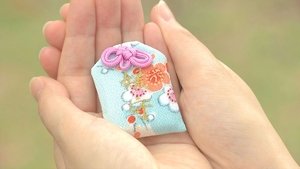
Kyoto is dotted with Buddhist temples and Shinto shrines offering amulets for health, longevity, safety, easy childbirth and other blessings. An amulet warding off an epidemic centuries ago now eases …
Flames rising from behind, piercing eyes and an enraged expression, statues of Fudo Myo-o hold a sword and lasso, both ritual implements. Despite its formidable appearance, this deity has a wide follo…
E9 · Nouveau Confections: A Feast for the Eyes, Mouth, and Mind
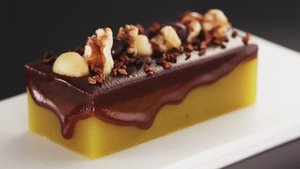
As the traditional confectionery industry wanes due to a growing preference for Western-style sweets, the younger generation of confectioners are using modern sensibilities to attract consumers. Some …
E10 · Vogue Kimono: Fashion in Evolution
Designers and kimono-lovers are sparking a kimono revolution in imaginative ways. They weave global tastes into orthodox fabrics, coordinate kimono with Western-style clothing, and adventurously emplo…
E11 · Ogawa Jihei Gardens: Beauty Soothes and Nourishes the Soul
From the late 1800's to the early 1900's, dominant political and business figures owned villas in neighborhoods at the foot of the Higashiyama mountains. Many of their gardens were built by the pionee…
E12 · The Double Ninth Festival: Beautiful Chrysanthemums Grant Longevity
The five seasonal festivals to drive out evil originate in Yin and Yang philosophy. The most important is the Double Ninth festival on September 9, the largest, single-digit odd number. Chrysanthemums…
E13 · Conversations: A Potter and a Kyogen Actor
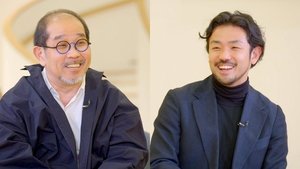
Two professionals from diverse fields, potter Matsubayashi Hosai and comic actor Shigeyama Sennojo discuss what it means to carry on a tradition and the similarities and differences between their prof…
E14 · Miyamoto Musashi: Sword Mastery in the Ancient Capital
Through novels and movies, the name Miyamoto Musashi has become synonymous with the word "samurai." The undefeated, 17th-century swordsman was also a master of calligraphy, the way of tea, and other a…
E15 · Warding Off Epidemics: Heartfelt Prayers for Safety
With the spread of Covid-19 in 2020, many annual festivals were condensed. But Kitano Goryoe was revived at Kitano Tenmangu after a 550-year hiatus in prayer for an end to the pandemic. The joint Shin…
E16 · Nouveau Lacquerware: Vibrant Dazzling Beauty
Solid, durable and decorative, lacquer is a lustrous, natural polymer used in art, architecture, Buddhist statues, and everyday items. Kyoto was the seat of the emperor and aristocratic culture, so la…
E1 · Conversations: A Nishijin Textile Producer & An Architect
Hosoo Masataka, the 12th-generation of a Nishijin brocade producer, is making waves abroad as he updates the Nishijin brand with new technology and textiles. Tokyo-based architect Aoki Jun is director…
E2 · The Forests of Keihoku: Nature's Blessings Sustain the Ancient Capital
Mountainous Keihoku in Kyoto's north is more than 90% woodlands. The drastic temperature differences and the frequent rain and mist are ideal conditions for forestry. For more than 1,200 years the are…
E3 · Conversations: The Enduring Pride of Two Venerable Families
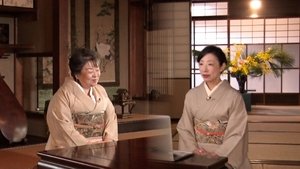
Reizei Kimiko is the daughter of the 24th head of a once aristocratic family. Together with her husband, she upholds traditions in Waka poetry and other court rituals. Sugimoto Setsuko, the 10th gener…
E4 · Life in a Machiya: The Appreciation of Nature and Time
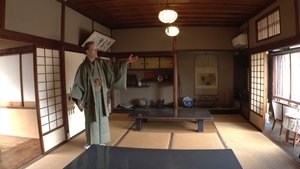
The traditional, wooden townhouses built prior to 1950 that dot the downtown area of Kyoto served as both living and work spaces. American Jeff Berglund, university professor and Kyoto tourism ambassa…
E5 · Tango Chirimen: The Finest Texture in Silk Crepe
The Tango district in northern Kyoto Pref. is Japan's largest producer of a supple fabric, supplying 60% of the kimono industry. The elegantly crimped texture makes it easy to dye. But with the prolif…
E6 · Conversations: A Landscape Gardener and a Glass Artist
Shigemori Chisao, grandson of landscape gardener Mirei, creates modern gardens in Japan and abroad, taking inspiration from dry-landscape Karesansui. This type of garden evolved in Zen temples in the …
E7 · Okudo-san: Traditional Cooking Stoves
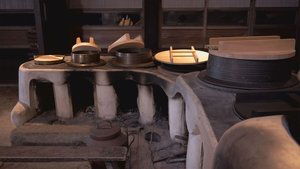
In Kyoto, traditional cooking stoves affectionately called Okudo-san were once the heart of the household and the focus of belief in the deity of fire. With the proliferation of electric rice cookers,…
E8 · Karakami: Ornamental Paper with Timeless Beauty
Karakami is washi woodblock-printed with nature motifs and geometric patterns. Arriving from China around 1,000 years ago, this ornamental paper came to be used in interiors as wallpaper and on slidin…
E9 · Higashiyama Potters: Creativity in Clay Connects the Ages
The eastern mountains once hosted many climbing kilns, attracting scores of potters. Kyo-yaki pottery evolved in its diversity for use in cooking and tea ceremonies. Modern potters uphold the old idea…
E10 · The World of Moss: Soothing Beauty, Subtle yet Refined
Verdant, furry moss, of which there are some 1800 varieties, has the power to fascinate. Moss makes a literary appearance in an early-10th-century poem. Later a culture revolving around moss appreciat…
E11 · Wire Netting Utensils: Practical, Superbly Handwoven Beauty
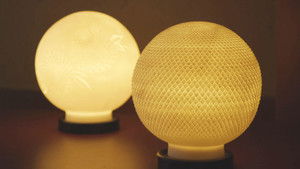
Wire netting techniques originated over 1,000 years ago in netting to repel birds and religious altar fittings and treasures, such as sutra receptacles. The intricate geometrical patterns can only be …
E12 · Kyoto Breweries: Aromatic Tipples to Suit the Times
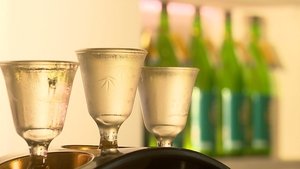
Sake brewing prospered for centuries on Kyoto's abundant water supply and quality rice. But demand has dropped recently with the increase of a variety of alcoholic beverages. Brewers search for new dr…
E13 · Taiko Drums: The Pulsing Heartbeat of Life
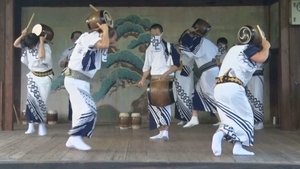
Since ancient times taiko have been instruments of communication with the deities. They provided inspiration as lively accompaniment to performing arts and continue to play a vital role in strengtheni…
E14 · Calligraphy for the Times: The Resonating Power of Ink
Expressing the infinite expanse through kanji characters brushed in shades of ink. Lying among the characters on the canvas, creating humanized works. Designing calligraphy to exude personality and au…
E15 · Tokonoma: Alcoves of Reverence and Welcoming Beauty
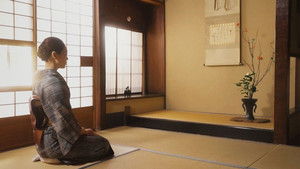
Tokonoma are a unique feature of tatami rooms, originally found in affluent households. Through the centuries, they slowly became standard fixtures for all social classes, including commoners. These a…
E16 · Beans: Versatile, Practical, and Cultural
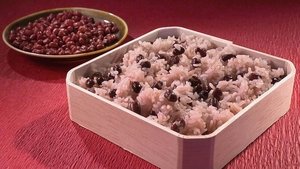
Beans are a beloved food eaten every day in Kyoto, but they are also a sacred legume used in imperial rites. Soybeans arrived in Japan along with Buddhism in the 6th century and were a mainstay in the…
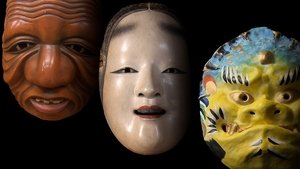
E17 · Dramatic Masks: Embodiments of Prayers to the Spirit World
Kyoto abounds with customs and traditions involving dramatic masks, such as Noh, a UNESCO Intangible Cultural Heritage; Nenbutsu Kyogen, comedic theater performed by amateur actors; and handcrafted Sa…
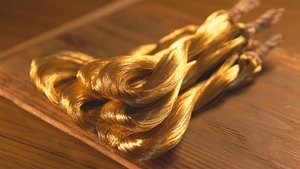
E1 · Woven Gold and Silver: A World of Shimmering Patterns
Gold and silver threads, made by lacquering gold and silver leaf onto washi, are indispensable in Nishijin brocade. The opulent appearance led to generous use in court and religious attire, and in fes…
E2 · Conversations: A Living Museum of Modern Architecture
After the capital moved to Tokyo in the late 1800s, Kyoto citizens enthusiastically modernized the city. Many of the buildings from that era, which were inspired by Western architectural techniques, s…
E3 · Writing Implements: Modern Elegance in Traditional Stationery
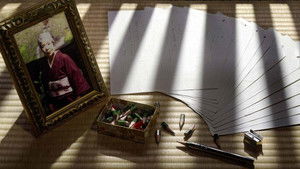
Aristocracy, samurai and high-ranking citizens of the ancient capital prized writing implements of sophisticated design, made with expert skill. Stationery was seen as conveyance of their intellect an…
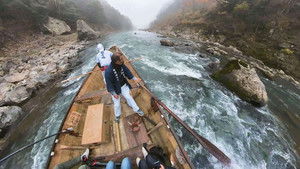
E4 · Kyoto's Countryside: Compassion for Nature and its Blessings
Kameoka, west of Kyoto, has supplied lumber and foodstuffs to Kyoto for over 1,000 years. Today it aspires to be an Environmentally Advanced City through the efforts of the sightseeing boatmen tacklin…
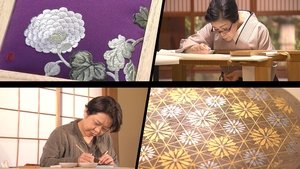
E5 · Conversations: The Power of Women in Decorative Arts
Nagakusa Sumie, born and raised in the textile area of Nishijin, was taught how to embroider kimono with elegant designs by her parents-in-law. Eri Tomoko learnt to embellish Buddhist statues with fin…
E6 · Gateways: Sacred Demarcations that Repel Evil
Gates allow passage through walls, fences and hedges, which separate individual premises from the outside. Temple, castle and residential gates take various forms depending on their design, location a…
E7 · Buddhist Bells of Prayer: A Universe of Sound Cleanses the Heart
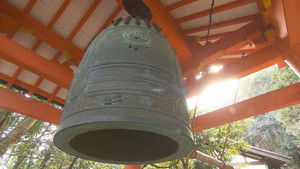
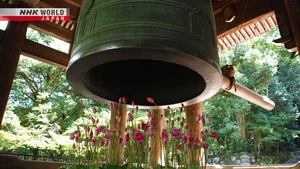
The tone and timbre of Buddhist bells depends on their shape, thickness and metal composition. When the ancient capital was established in the late 8th century, temple bells were positioned in auspici…
E8 · Conversations: Learning Aesthetics from the Ancients
American photographer Everett Kennedy Brown, a resident of Kyoto, traveled more than 50 countries during his career as a photojournalist before settling in Japan over 30 years ago. He expresses Kyoto …
E9 · Old Building Materials: The Ancient Capital's Culture of Recycling
Kyoto has many shrines, temples and traditional structures, spurring people to place special value on old building materials over the centuries. After the Middle Ages, merchants at the center of comme…
E10 · Dried Foods: Ancient Wisdom Gracing Kyoto Tables
Dried foods evolved as an efficient way of transporting produce to the ancient capital. The practice increased not only their shelf life but also their tastiness and nutritional value. The foodstuffs …
E11 · Art Frontier: Creators Forge New Paths into the Future
Kyoto artists are focusing on new styles of art, based in the traditions of the old capital. One captures paint splashes with a high-speed camera to create "ikebana" in motion. Another uses the natura…
E12 · The Lights of Kyoto: Illuminating and Soothing People's Hearts
Candles were long prized in the city's many shrines and temples, and throughout the ancient capital. People did not see them as mere implements to illuminate the dark but also symbols of devotion and …
E13 · Shikimono: The Culture of Living on the Floor
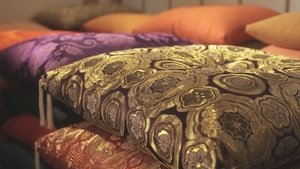
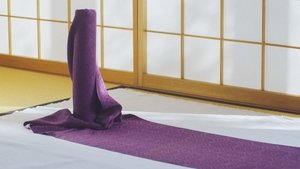
Tatami, cushions and futon--collectively referred to as Shikimono--evolved in the imperial palace, shrines and temples to suit the Japanese custom of sitting and sleeping on the floor. But, the popula…
E14 · Wazuka Tea: A Vibrant Village of Fragrant Fields
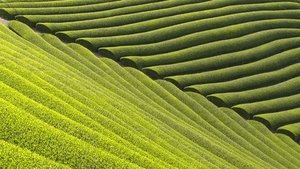
The town of Wazuka in southern Kyoto Prefecture has recently been in the spotlight as a producer of quality tea leaves. It produces around 40 percent of renowned Uji tea and 20 percent of choice Tench…
E15 · The Beauty in Copying: An Art Form of Aspirations
The tradition of copying evolved in Kyoto over centuries through woodblock prints and reproductions of artworks. A 17th-century monk etched 60,000 woodblocks with sutras to promulgate Buddhist teachin…
E16 · Conversations: The Colors of Kyoto
Textile producer Shimura Shoji dyes threads for his kimono and other items with natural pigments, used since ancient times. Together with his mother and grandmother, both dyers, he founded a school to…
E17 · Ornamental Metalwork: Magnificent Mastery Transcends Generations
Ornamental metalwork evolved mainly in the ancient capital through the patronage of the imperial court and places of worship. Metalworkers beat, stretch, carve, shave, and cast metal to create nail-he…
E18 · Men's Kimono: The Beauty of Dressing with Flair
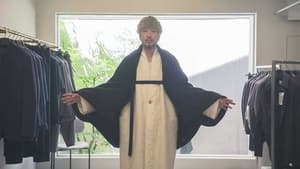
Kimono are worn as formalwear and in cultural pursuits, but few men don them and the market has shrunk. Various initiatives aim to reverse this trend. One man sells outfits to dispel the image of kimo…
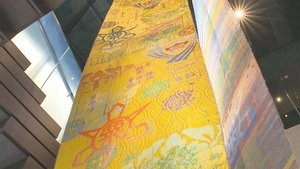
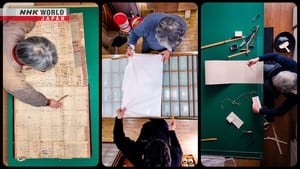
E19 · New Directions for Washi: The Sustainable, Elegant Use of Paper
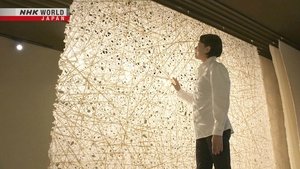
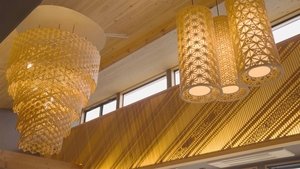
A washi designer combines huge sheets of washi with lighting to enliven open architectural spaces. Stoles made from dyed, washi-woven textile are the amalgamation of traditional Kyoto chic. An apparel…
E20 · Kamo River: The Flow of Life and Culture in the Ancient Capital
The Kamo River flows 23km north-south through the city center. Emperors on their enthronement would once purify themselves in its waters, and dyers would rinse bolts of fabric downstream. An entertain…
E21 · The Spirit of Frugality: Modern Ingenuity and Age-Old Wisdom
As the ancient capital, Kyoto is known to be graceful and splendid. But the merchant and lower classes were thrifty, cleverly using the resources at hand. They treasured their belongings, using them r…
E22 · Dashi Stock: Savory Umami for Exquisite Cuisine
When Washoku, or Japanese cuisine, became UNESCO Intangible Cultural Heritage in 2013, the flavor called umami became more widely known abroad. And, dashi is the ingredient that produces this umami. K…
E23 · The Dragon: Deity of Water, Protector of the Capital
Belief in imaginary, spiritual dragons arrived from mainland Asia and differs in Shinto and Buddhism. The blue dragon, as water deity, is one of the directional guardians believed to defend the ancien…
E1 · Rice Straw: Beauty Within the Prayers of Daily Life
Fushimi Inari Taisha holds a festival in November, burning rice straw in gratitude of a plentiful harvest. The straw symbolizes a meaningful connection as the deity of rice is believed to dwell within…
E2 · Antiques: Beauty Engendered by the Passage of Time
Life in Kyoto has long been underscored by a culture of frugality and cherishing belongings; the city has many stores dealing in curios and antiques. One shop handles old calligraphic works and painti…
E3 · Samurai Armor: The Dignified Aesthetics of the Warrior Class
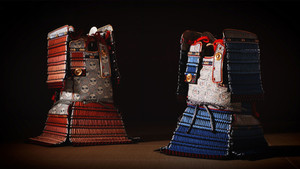
In the 10th century samurai guarding the emperor and aristocrats began to wear colorful armor, reflecting the capital's elegance. High-ranking samurai practiced mounted warfare, shooting arrows from h…
E4 · Miso: Fermentation, the Taste of Kyoto
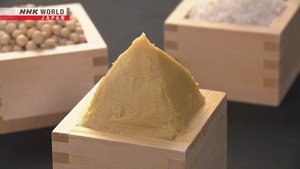
Fermenting soybeans, Koji mold and salt produces miso. The taste of this rich, aromatic seasoning varies depending on regional climates. In Kyoto, rice miso is the standard, while white miso, which ev…
E5 · Minamiyamashiro: The Buddhist Treasures of a Remote Region
Minamiyamashiro, in the very south of Kyoto Pref., was once an important transportation hub, and many Buddhist temples were built to spiritually watch over this secluded region. Around the 15th centur…
E6 · Rethinking Buddhism: Uniting Modern Society with Compassion
Kyoto has been a stronghold of Buddhism for a millennium, with over 1,600 temples located in its city limits. But temples face a drop in parishioners as the population declines and youth show disinter…
E7 · Phantom Dyeing: Ancient Colors of Prayer Revived
Heian courtiers 1,200 years ago wore robes made of fabric dyed with medicinal herbs to produce colors of prayer for peace and to keep evil at bay. But most of these colors have been lost to time. Fasc…
E8 · Reusing and Upcycling: Tradition Bolsters the Power of Recreation
Upcycling means reusing discarded or unused items to create products with higher value than the originals. Unwearable and unsellable kimono are resewn into dresses. Misshapen, substandard, Kyoto-grown…
E9 · Sustainable Initiatives: Nishijin Weavers Embrace the Times
Carbon- and glass-fiber textiles promise potential for a sustainable society. Textile artworks boast fine, painting-like and photo-like expression. Artisans who weave with their fingernails establish …
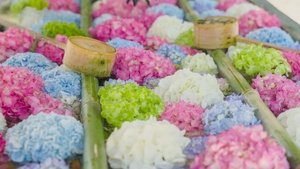
E10 · Flower Art: Ephemeral Colors for the Mind and Soul
Flowers in bloom manifest the changing beauty of nature over time. Kyotoites treasure them as symbols of not only nature but life. Flower-inspired artworks are created in various fields in Kyoto. A Ja…
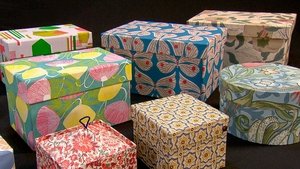
E11 · The Beauty in Boxes: Containers to Hold and Express Sentiments
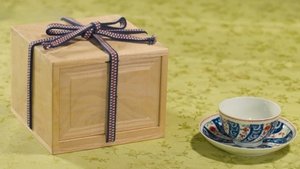
Boxes are crafted from wood, paper and other materials. But in Kyoto, boxes are not mere containers. They serve to protect the dignity and enhance the value of the contents. Fittingly, when selecting …
E12 · Seven Lucky Gods: Blessings of Fortune and Happiness for All
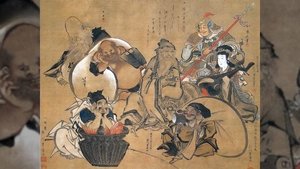
Deities from Japan, China, and India evolved into the Seven Lucky Gods, who are popularly depicted aboard a treasure ship. A pilgrimage of seven temples and shrines, each dedicated to one of the deiti…
E13 · Made to Order: A Bespoke Culture Fostered on Customer Bonds
Kyoto has a culture of ordering personalized goods, yet it is more than just placing an order. As Japan's ancient capital, the city attracted diversified artisans. Many artisan-customer relationships …
E14 · Kuta Hanagasa Dance: The Solid Bonds of a Rural Community
Forty-one ritual folk dances from around Japan were added to the UNESCO Intangible Cultural Heritage of Humanity List in 2022. The Kuta Hanagasa Dance is performed in a rural community in the very nor…
E15 · The Power of Cleaning: Daily Habits for the Heart and Soul
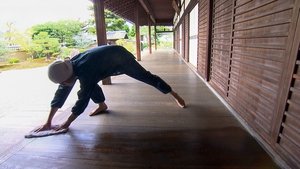
The Kyoto cityscape is dotted with historic Buddhist temples, traditional Machiya townhouses, and Ryokan inns. Cleaning is vital for their longevity and appearance, but it is more than the act of remo…
E16 · Crawling Through Mud: Avant-Garde Ceramicists Break With Tradition
Kyoto has been a thriving pottery production center since the 17th century. After World War II, young men born into pottery families formed Sodeisha, literarily "Crawling through Mud Association." Thi…
E17 · Stonework: Masons Shape a Solid City Presence
Stone is a noticeable feature when walking through Kyoto's townscape: pavements, stairs, and religious statuary and objects. Stonemasons bring out the inherent beauty and qualities of their materials.
E18 · A Student Town: Eagerly Nurturing the Future
One tenth of Kyoto's population is university students: the driving force behind the revitalization of the city and its cultural activities. Get an alternative glimpse of Kyoto as a student town.
E1 · Cooking Utensils: Craftwork Ensures the Future of Traditional Cuisine
Cooking utensils influence Kyoto cuisine, helping to bring out the inherent flavor of local ingredients. Artisans and chefs believe that upholding the handicrafts sustains the taste of Kyoto.
E2 · Ramen Culture: The Continuous Evolution of Diverse Taste
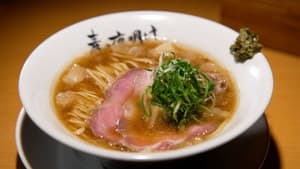
Kyoto is not all traditional cuisine. It has become one of Japan's leading ramen hubs thanks to being a student town. Tastes evolve and flavors change as restaurants strive to satisfy clientele.
E3 · Mounting Techniques: The Masters of Refined Presentation and Rejuvenation
Paintings and calligraphy are often mounted on sliding doors and scrolls. Artisans consider the story behind each piece and the client's wishes to best showcase the artwork.
E4 · Joinery: Wood Comes Alive in the Finer Details
Traditional carpentry employs wooden joinery in furnishings to fit pieces of wood together without use of metal nails. Artisans breathe new life into the wood, imbuing a Kyoto aesthetic as they work.
E5 · Ceramic Painters: A New Perspective to Mastering the Art
Kyoto potters refine their skills in a division of labor. Two painters wield their brushes to create delicate designs in majestic strokes and colors, gaining much attention in the industry and beyond.
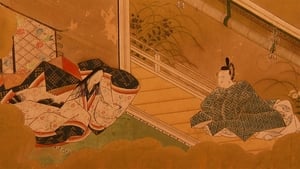
E6 · The Tale of Genji: Elegance That Transcends the Ages
This 11th-century novel is set in the imperial court. As a work of literature and paintings, it captured people's hearts, profoundly influencing the culture of the ancient capital for a millennium.
E7 · Versatile Oil: Smoothing the Way in Everyday Life
Kyoto dominated the oil market 1,000 years ago. Various oils fueled votive lamps, flavored food, preserved wood, and were used in pomade and cosmetics. Oil still plays a key role in the culture today.
E8 · Essayist Omura Shige: The Life and Compassion of a Quintessential Kyotoite
Omura Shige (1918-1999) wrote about daily life and the treasured customs of Kyoto, and introduced the Kyoto style of home cooking, called Obanzai, to people throughout Japan in her writings.
E9 · Festival Horses: Galloping for the Deities in Shinto Rituals
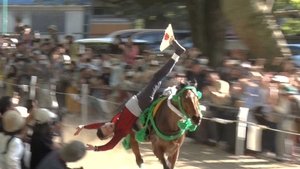
Horses take center stage in the ancient capital's events, such as two May festivals—Aoi Matsuri boasting ornate historical attire and the 1,200-year-old Fujinomori-sai.
E10 · Modern Fashion: A New Wave of Style Born from Tradition
For centuries, Kyoto has been the hub of kimono fashion, spawning the weaving and dyeing industries. Today, designers take inspiration from traditional styles and techniques to create everyday attire.
E11 · Kemari: An Ancient Football Game Played for Eternity
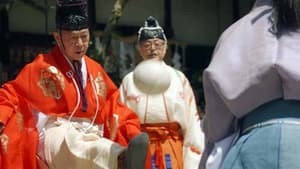
In Kemari, players kick a ball into the air and strive to keep it off the ground. They master the mentality, skill, and conduct of the game, now played as a wish for peace throughout the nation.
E12 · Lake Biwa Canal: A Nearby Lake Boosts Life in the Ancient Capital
In 1869, the emperor's move to Tokyo led Kyoto's economy and population into decline. A canal was dug as a last resort to revive the city. It still supplies water, generates power and boosts tourism.
E13 · The Central Wholesale Market: Discerning Eyes Keep Food Culture Alive
Japan's first central wholesale market, goes beyond mere distribution. With strong ties to local chefs and producers, it plays a major role in training professional connoisseurs.
E14 · Ancient Daigo-ji: A Temple Takes its Treasures and Lore into the Future
This UNESCO-registered Buddhist temple houses many precious items. Its buildings and statues are National Treasures, but its paper records attract domestic specialists for evaluation and designation.
E15 · Traditional Books: Age-old Wisdom Conveyed in Print
The desire to pass on knowledge spurred the evolution of books made of washi paper. Artisans carry on the trade of binding with thread, repairing damaged books, and creating facsimiles of old books.
E16 · Diversity in Plants: The Radiance of Life in Daily Life
Flora is integral to traditional and modern Kyoto life. Japan's oldest public botanical garden which celebrates its centennial and a medicinal plant garden preserve rare plants for posterity.
E17 · Tayama Hana Odori: Deities Nurture Community Ties
The Tayama Hana Odori is held to pray for rain in Minamiyamashiro, a major Uji tea producer. The village is facing depopulation, and this festival brings long-time locals and newcomers together.
E1 · Alleyways: The Age-Old Wisdom of Town Planning
Kyoto has about 13,000 alleys with a total distance of 940km, and an increasing number of their houses are unoccupied. People are working on projects and tours to preserve and revitalize these areas.
E2 · Fall in Saga-Arashiyama: The Beauty and Colors of Change
This iconic Kyoto destination, popular for a millennium, has the perfect climate and topography for fall foliage. Some people create new ways to enjoy autumn, while others uphold fall traditions.
E3 · Bows and Arrows: Averting Trouble and Drawing Happiness
Several annual rituals performed at Shinto shrines involve bows and arrows that are believed to hold divine power and dispel evil. These weapons also hone the spirit through the practice of archery.
E4 · Shamisen: The Reverberating Tones of Passion and Tradition
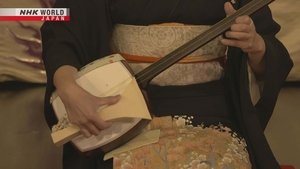
Shamisen tones, filled with emotion, harmonize with the culture of traditional entertainment districts. The dwindling number of musicians has aroused the effort to keep the instrument and music alive.
E5 · Raden: The Iridescent Beauty of Mother-of-Pearl Inlay
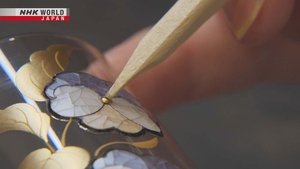
Raden, a decorative lacquerware technique, uses the glimmering inner layer of shells. The inlay appears to float resplendently on the black lacquer, inspiring artisans to take the art into the future.
E6 · Shotengai: Bustling Shopping Streets Reflect Their Neighborhood
The city's around 150 shopping areas manifest the diversity of the local culture. Some are reinventing themselves to, once again, become the focus of the community as well as handle overtourism.
E7 · Traditional Roofing: Glittering Tiles Catch the Eyes
The dark-grey, clay roofing on shrines, temples, and Machiya townhouses is buffed and smoked to boost durability, water resistance, and luster. Craftsmen and roofers uphold the traditional techniques.
E8 · Matsunoo Taisha Festival: Local Residents' Prayers Bind the Community
Matsunoo Taisha is the guardian Shinto shrine to Kyoto's west. In April and May, the deities are carried through the community in prayer for local prosperity, upholding a 1000-year-old tradition.
E9 · Proprietresses: Keeping Heritage Businesses Alive and Inspired
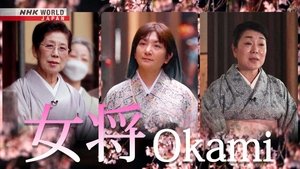
Women born or married into heritage businesses keep generations of wisdom alive in novel ways. Kyoto's time-honored image and brand would not be what it is without their exemplary conduct and kindness…
E10 · Handcrafted Bags: Embodiment of the Artisans' Passion and Attention to Detail
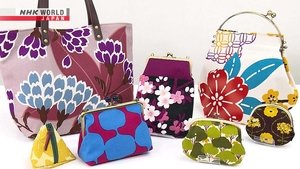
Traditional Kyoto-style bags are made from Nishijin brocade, Yuzen-dyed fabric, and other locally made premium textiles. Artisans also continue to create practical and durable bags from sailcloth.
E11 · Tea Kettles: A Universe Within the Iron
Iron kettles rust and corrode over time. For centuries metal casters specializing in kettles have cast diverse kettles for tea gatherings, creating a universe of infinite beauty within that corrosion.
E12 · Ethereal Lanterns: Lighting the Cityscape of the Ancient Capital
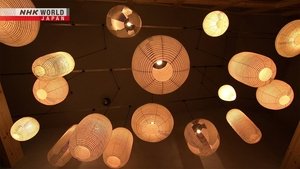
Lanterns still bring charm to traditional settings at night. Kyoto artisans uphold their skills despite decreasing demand, producing lanterns for use across Japan, while embracing new initiatives.
E13 · Trends in Footwear: Health, Beauty and Functionality Born from Tradition
New footwear styles are gaining traction in Kyoto, home of the kimono. Age-old techniques are used to create geta sandals for healthy feet and leather shoes that suit Japanese and Western attire.
E14 · Natto: The Authentic Umami of Fermented Soybeans
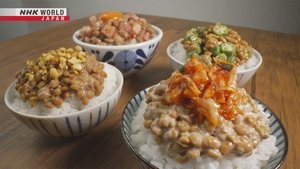
Kyoto has a rich fermentation tradition, from soy sauce to sake. Recently, natto has been gaining global attention as a superfood, with new efforts underway to boost its appeal and appreciation.
E15 · Handcrafted Accessories: Refined Beauty Adds Life to Any Outfit
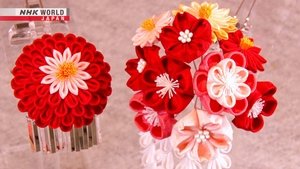
Kyoto artisans feel a sense of crisis about the future of their distinctive crafts. To keep traditional skills alive, they are adding chic accessories to their product lines to create new demand.
E16 · Fish Paste Foods: Tradition Shapes the Bounty of the Sea
Fresh fish was a luxury for people in landlocked Kyoto, so they incorporated dishes made from ground fish into their cuisine with Kyoto flair, allowing everyone to savor the rich essence of seafood.
E17 · The Autumn Moon: Gratitude and Prayers for Bountiful Harvests
Ancient nobles admired the full moon in autumn with elegant parties. Those pastimes evolved into local temple and shrine festivals now held to celebrate nature's bounty and pray for next year's crops.
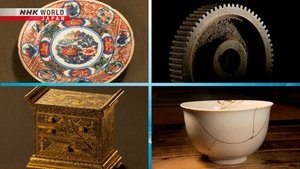
E18 · Repair & Restoration: A Respect for Objects and Memories
Kyoto is a trove of historical and cultural assets. Architecture and artworks are being restored daily. The custom and wisdom of cherishing everyday objects too is an ingrained part of Kyoto culture.
E19 · Foreign Residents: Infusing New Life into Tradition
Many foreigners make Kyoto their home and bring innovation to traditional culture. Their creativity and global perspective spark revitalization and inspiration as they breathe new life into the city.
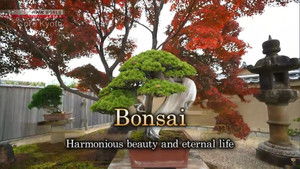
E1 · Bonsai: Harmonious Beauty and Eternal Life
Bonsai came from China over 1000 years ago, evolving into a unique artform. In Kyoto, the emphasis is on beauty and harmony in space, the same aesthetic that flows through ikebana and the Way of Tea.
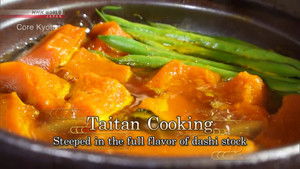
E2 · Taitan Cooking: Steeped in the full flavor of dashi stock
Taitan is Kyoto-style cuisine in which seasonal heritage vegetables are simmered until they are infused with dashi stock. The method evolved from vegetarian dishes made at Kyoto's Buddhist temples.
E3 · Tsukemono: Vegetable Pickles Embody Wisdom and Expertise
Traditional Tsukemono, or pickles, preserve centuries of wisdom, allowing the vegetables' inherent flavors to shine. Picklers uphold tradition while embracing new challenges for modern tastes.